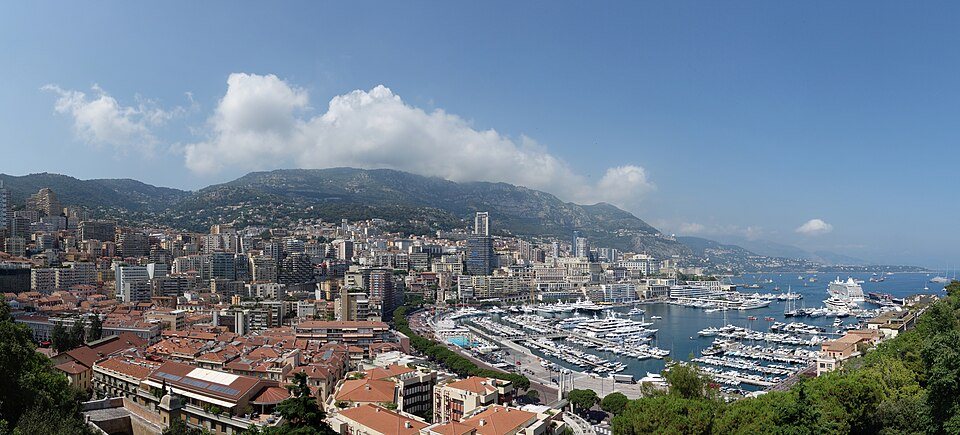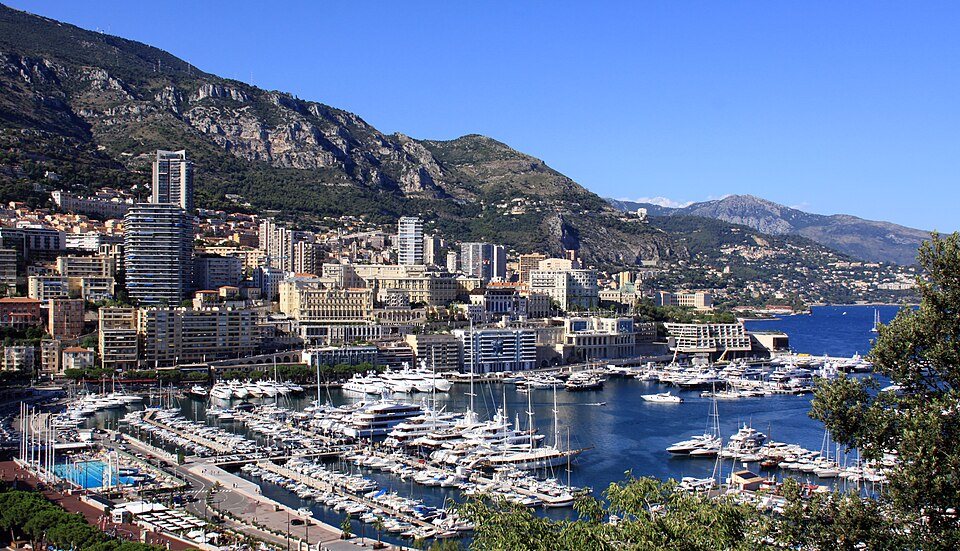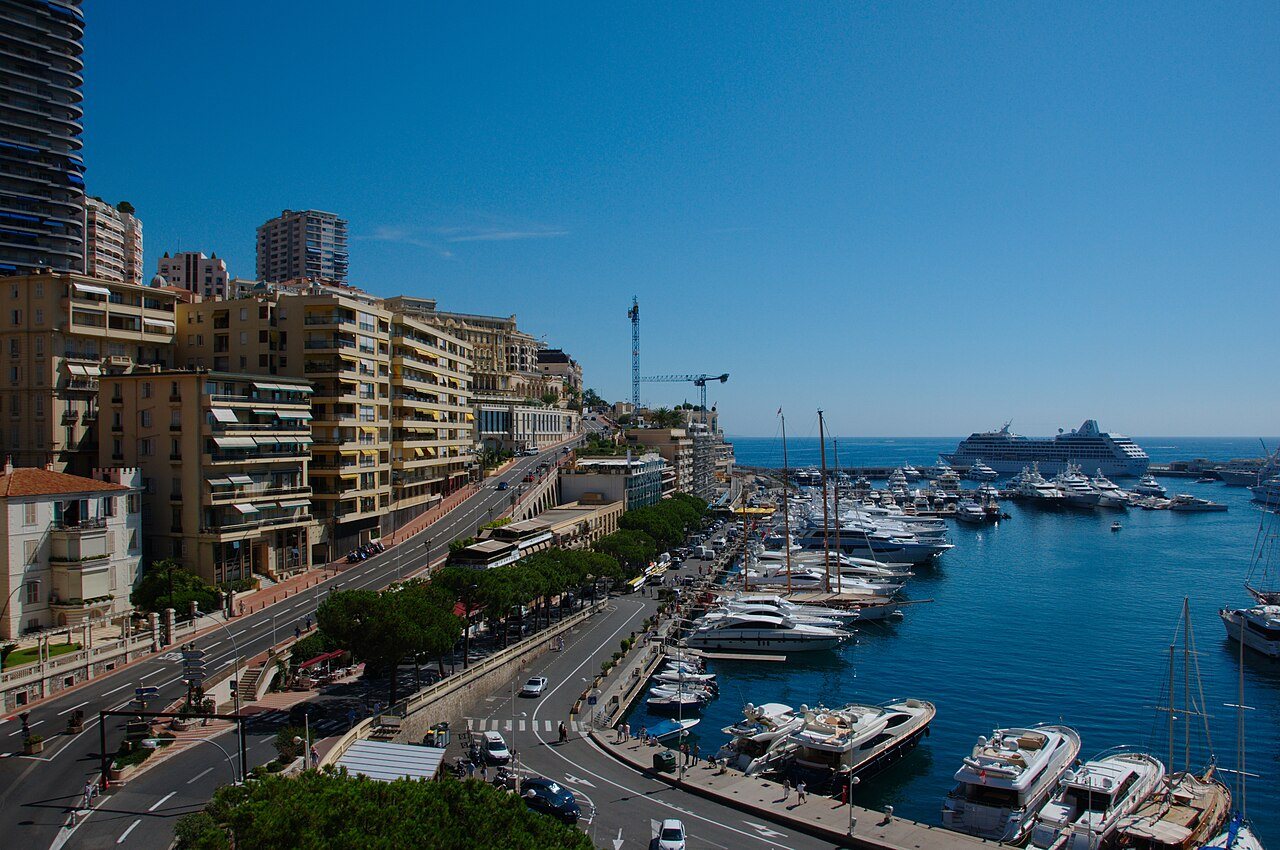
There is exactly one walk in Monaco that costs nothing, requires no ticket, and rewards no particular fitness: the loop around Port Hercule. It is flat, it is short enough to do twice without noticing, and it is the one place in the Principality where looking at other people's property is the entire point of being there. Nobody is going to stop you. Nobody is going to sell you anything you didn't ask for. You just walk.
Where it actually starts
Most visitors drift into the harbour from the Monte-Carlo side, coming down the hill near the casino gardens, which is fine, but the better starting point is lower down, at the roundabout by Sainte-Dévote. This is the chapel at the foot of the hill that gives the Grand Prix its starting corner its name, and it's also where the harbour properly begins if you're coming from the train station or from Monaco-Ville. From here the quay runs in a long curve around the water, and you can simply follow it without needing a map.
The walk itself has no official length because nobody has decided where the "harbour walk" starts and stops — it's just a quay that wraps around a basin. In practice people walk from Sainte-Dévote around to Fontvieille, or they do the shorter loop around the inner basin only. Either way, you're never more than a few minutes from a bench, a public toilet, or a way back up into town.
The yachts, and why there are so many
The boats are the reason everyone is here, and they're worth looking at properly rather than just photographing from a distance. Port Hercule is one of the few deep-water ports on this stretch of coast that can take superyachts alongside rather than at anchor, which is why the biggest hulls tie up stern-to right along the quai des États-Unis — close enough that you can read the names painted across the back and, on the quieter ones, watch crew hosing down teak decks in the early morning. The flags tell you where a boat is registered, not who owns it, and the Monaco-flagged ones are often chartered rather than privately owned. None of this is signposted, so you're working it out from what you can see, which is most of the pleasure.
The window for serious yacht-watching is during the spring and early-autumn events calendar, when the harbour fills up for the Grand Prix and the yacht show. Outside those periods the basin is quieter, and you'll see more local sailing boats and the Monaco-registered tenders than superyachts.
Don't expect to walk onto any pontoon. The inner jetties are private, gated, and watched — the public quay is the wide promenade, not the finger docks the boats are actually tied to. People try this more often than you'd think and get turned around by harbour staff within seconds.
The digue, and the Grand Prix underfoot
Partway along, a long breakwater — the digue — reaches out into the sea and encloses the harbour on its outer side. It's walkable, it's one of the few places in Monaco where you get an uninterrupted sea view back toward the Rock, and it's also part of the Grand Prix circuit for one week a year, when it's built up with grandstands and closed to the public entirely. The rest of the year it's just a long concrete arm with railings, wind, and considerably fewer people than the main quay. If you want a photograph of the palace and the old town together, this is where to get it, not from the harbourside itself.
The circuit, in fact, runs right along sections of the quay you're walking — the same tarmac the cars use in May carries delivery vans and pedestrians the rest of the year, and you can still pick out the painted kerbing and barrier mounts if you know to look down rather than out at the water.
What's actually along the way
Walking the full curve, you pass the Monaco Yacht Club building, a scattering of cafés angled toward the water, and eventually the ramps and fuel pontoons that are the working, unglamorous end of the harbour — this is where boats actually get serviced, not just admired. Public buses and the small electric shuttle both run along roads parallel to the quay if your feet give out before your curiosity does; see getting around for how the local routes connect the harbour to the rest of the Principality.
At the far end, the quay doesn't so much finish as hand off: the path climbs slightly and becomes the approach to Fontvieille, Monaco's other harbour and its reclaimed-land district. If you keep going you'll end up among Fontvieille's own marina and its stadium rather than circling back, so decide before you set off whether you're doing a loop or a one-way walk that needs a bus back.
For the full picture of how this harbour fits into Monaco's relationship with the sea — including why so much of the flat ground here was once water — read the sea and made ground, which explain the land reclamation that created most of what you're walking on.
Why bother
It sounds like a strange thing to recommend — walking around a car park for boats — but Port Hercule is Monaco's one genuinely public, genuinely free space that isn't a garden with opening hours or a museum with an admission desk. You can arrive with no plan, leave with no obligation, and still come away having seen most of what makes the country specific: the hill, the Rock, the old fortifications, the modern towers, and the boats that paid for a good deal of it. Pair it with a coffee at one of the quayside cafés — see food and drink for where locals actually go rather than where the view is loudest — and it's a morning well spent without having opened your wallet once.
In pictures