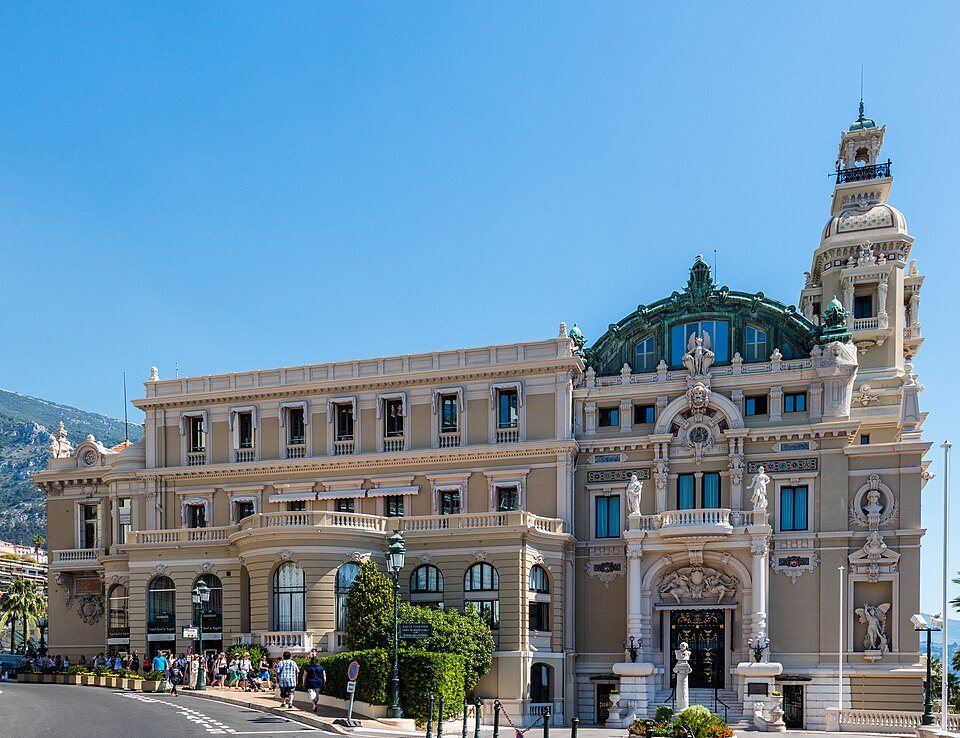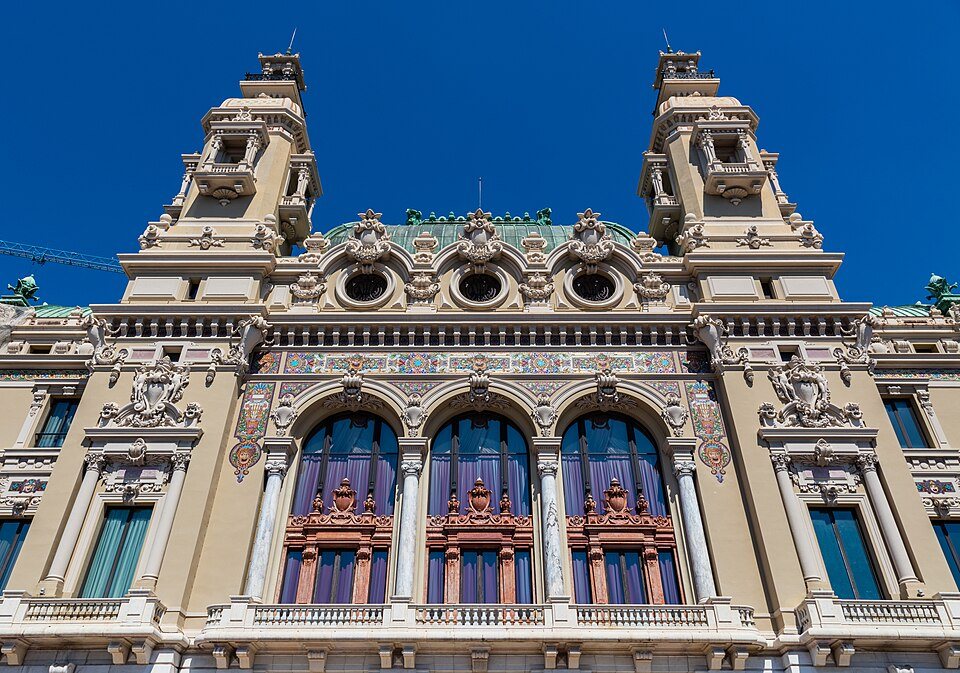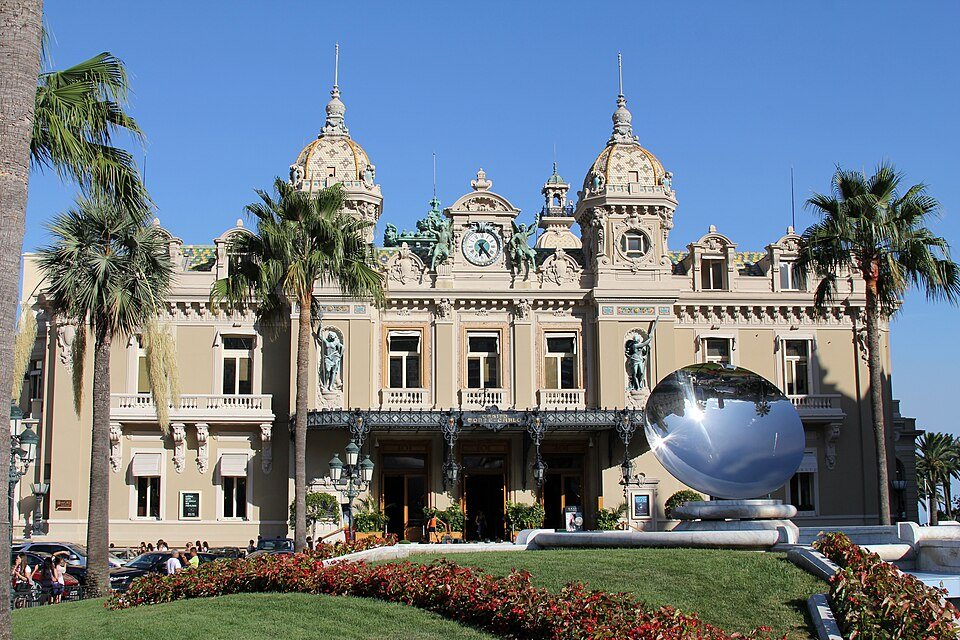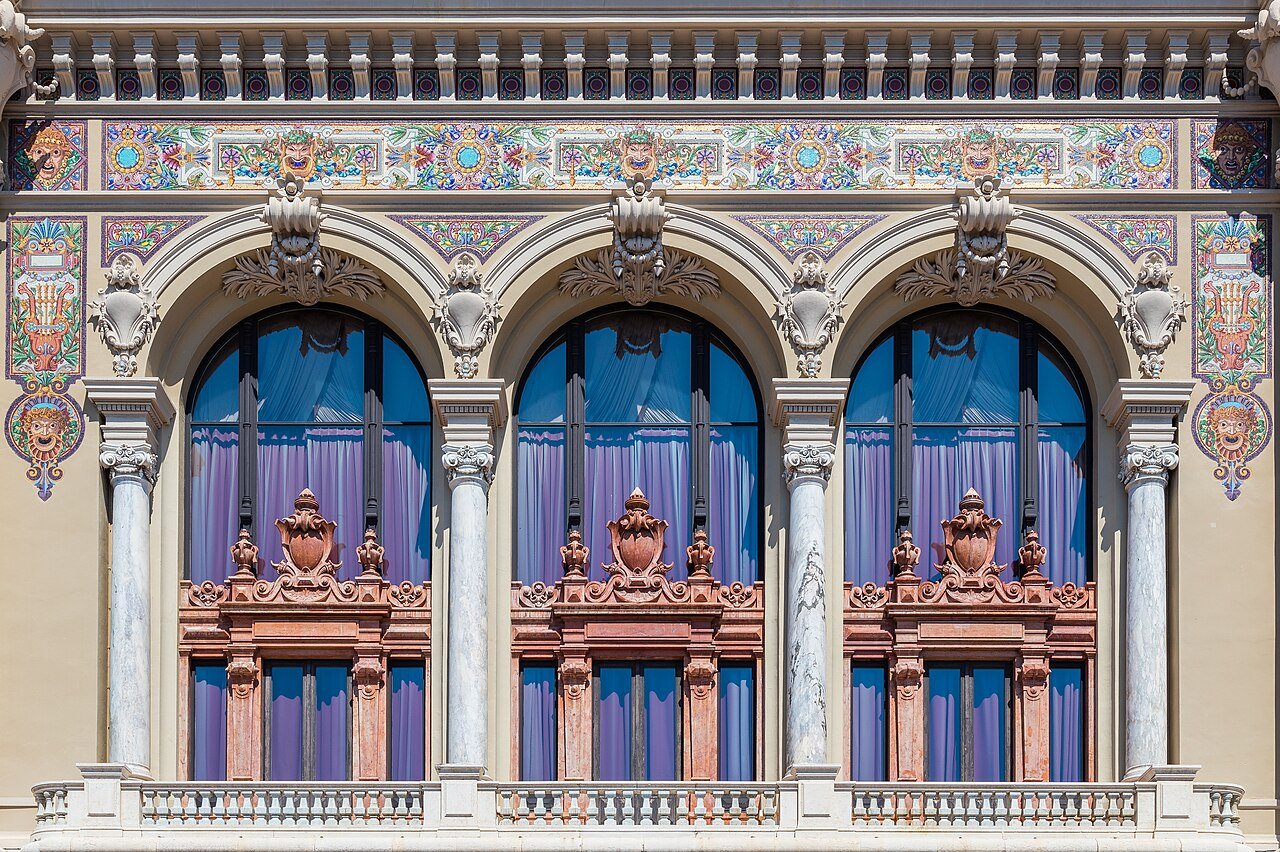
It was designed by Charles Garnier, the architect of the Paris Opéra, and finished in the 1870s — a Belle Époque pile of paired columns, bronze, glass and sculpture facing a formal square and terraced gardens above the sea. The building houses a casino; that is what it was built as and it is what it still is.
What makes it worth a page here is the other half: the Salle Garnier, a small, extravagantly decorated opera house built into the same structure, where Diaghilev's Ballets Russes worked and where several operas had their premieres. It has its own entrance and its own season.
The Place du Casino and the terraced gardens around it are public, free and open, and the architecture reads better from outside than in.
Entry to the interior is restricted, age-limited and dress-coded. What this page covers is the building — Garnier's facade, the atrium and the opera house behind it.
Come for the square, the façade and the gardens, which cost nothing — and see the Salle Garnier properly by going to a performance.
The Garnier Building in pictures