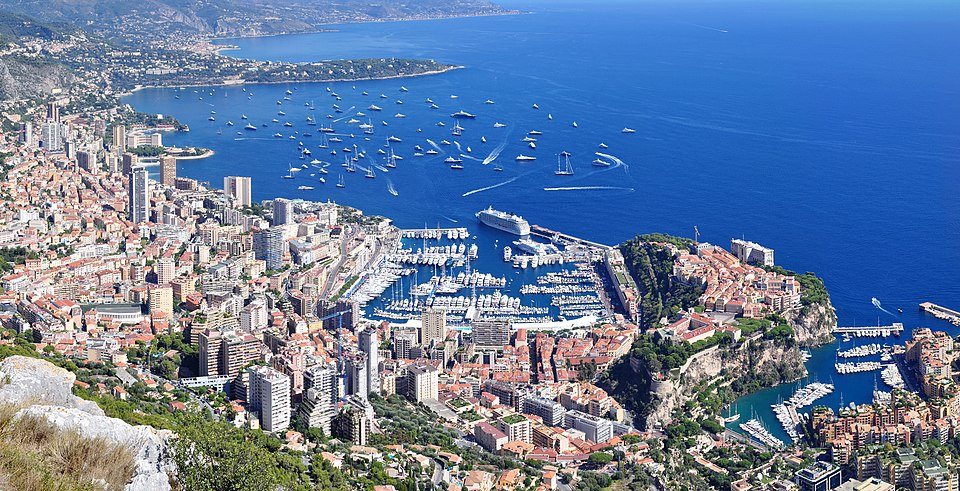
Monaco is built on a cliff, not a plain, and every plan the principality has ever made for getting people around has had to answer to that fact first. The solution, worked out over decades, is a scattered network of public elevators, escalators, and moving walkways that thread through the rock and between buildings, all of it free to use, all of it open to anyone who walks up and presses the button. There is no ticket, no gate, no app. You just get in.
Visitors tend to discover this network by accident — usually because a map shows two points close together, and only on arrival does it become clear that one is forty meters above the other. Monaco has roughly thirty of these public lifts and escalator combinations at last informal count, connecting neighborhoods stacked on top of each other like Monaco-Ville, Fontvieille, and the districts around Port Hercule. Most of them are unglamorous: a stainless-steel box tucked into a rock face or a stairwell, marked with a small blue sign reading "ascenseur public." You will not photograph them. You will, however, use at least two.
Why the cliff matters more than the map
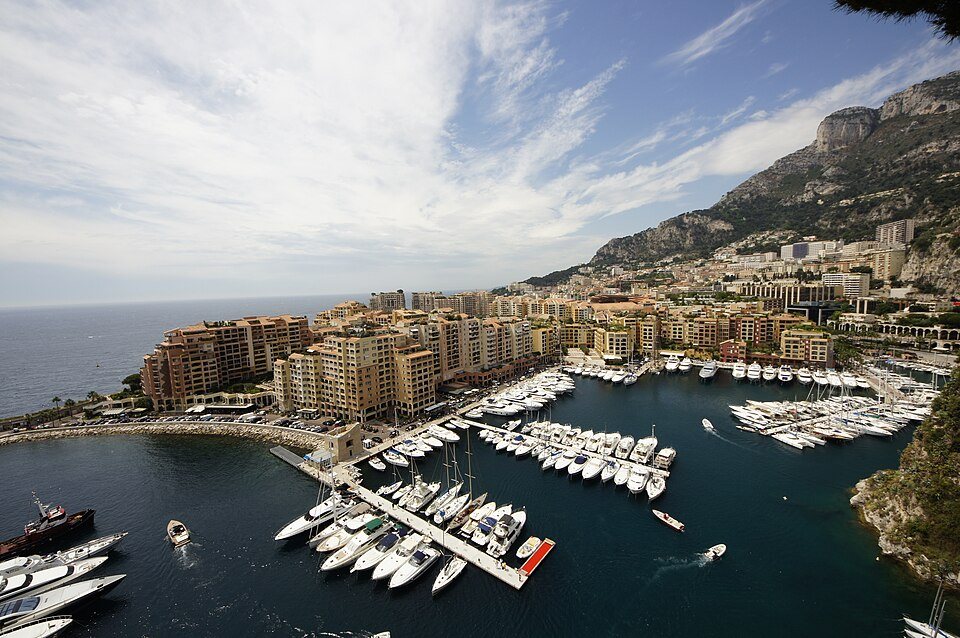
A straight line on a Monaco map can be deceptive. The distance from the train station to the Palais Princier looks short enough to stroll in a few minutes, and it is — if you're only counting horizontal distance. Vertically, Monaco stacks several distinct levels: the sea-level harbor and marina, the terrace level where the casino gardens and grand hotels sit, and the high plateau of Le Rocher where the old town and palace stand. Roads switch back on themselves to manage the grade, which is why a taxi ride between two nearby-looking points can take longer than expected, and why walking directly is sometimes simply not an option — there's a cliff in the way, not a street.
This is the actual, practical reason the lifts exist. They were not built as an attraction. They were built because stairs alone couldn't move a working population, plus tourists, plus everyone's luggage, up and down a rock face every day.
The one you'll meet first: the train station lifts
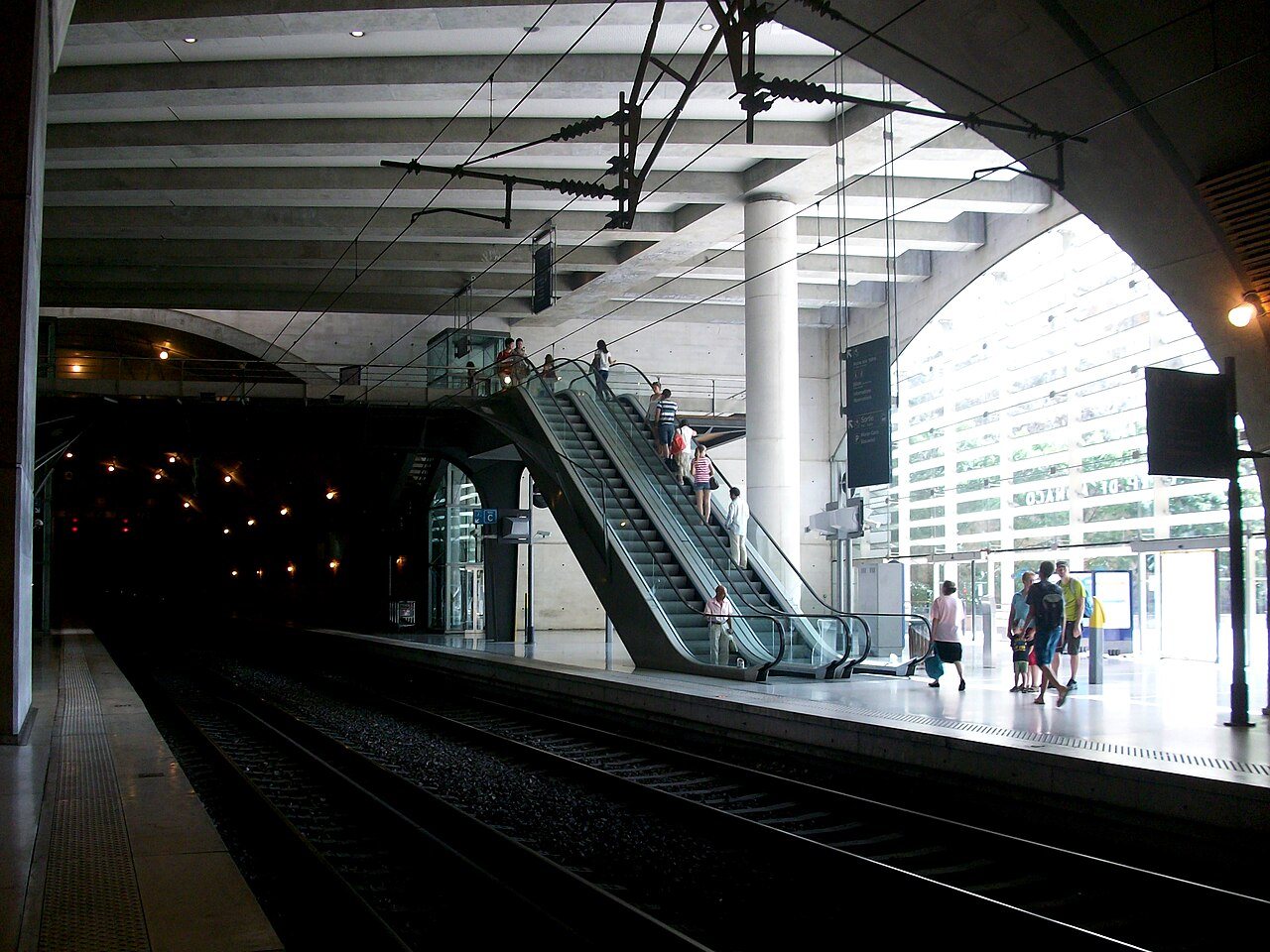
If you arrive by train, you'll meet this system before you've even worked out which way is up — literally. The Monaco-Monte-Carlo station is carved into the mountain and sits well below street level, so SNCF and the principality built a long chain of escalators and elevators to bring arriving passengers up to daylight. Crucially, the station has multiple exits that surface in completely different neighborhoods: one set of escalators lets you out near the upper town toward Monaco-Ville, another toward the Larvotto side, another toward the casino terraces above the port.
Before you get on any escalator, glance at the exit signage rather than just following the crowd — picking the wrong exit from the station is the single most common way visitors add an unplanned twenty-minute walk to their day, since the exits do not lead to adjoining streets, they lead to entirely different levels of town.
These escalators run continuously during the station's operating hours, but they do shut down outside them, exactly like the trains they serve — check the timetable posted at the station rather than assuming they run around the clock.
The one that saves the climb to Le Rocher
The second lift most people end up using, often without planning to, is the one that connects the lower port level near Fontvieille up toward Le Rocher, sparing you the long, genuinely steep climb up the Rampe Major and the switchback road that otherwise gets you to Monaco-Ville. Anyone heading to the Palace, the Cathedral, or the old town after parking or walking along the port will find this lift far more forgiving than the alternative on foot, especially in summer heat or with children in tow.
It's worth knowing this route exists even if you don't take it outbound — plenty of visitors walk up the Rampe Major once, out of curiosity or stubbornness, and then quietly find the lift for the return trip. There is no shame in this; the gradient is real, and the historic street offers nothing that requires walking it twice.
The rest of the network, briefly
Beyond those two, the lifts multiply into a system locals use without thinking about it. There are connections linking the casino terraces area down toward Larvotto and the beaches, useful if you're staying near the harbor and want to reach the sea without a long detour around the headland. There are others tucked into the hillside near Jardin Exotique, easing the climb to that garden's clifftop position, and smaller ones woven into the streets around Fontvieille and the port that mostly serve residents moving between apartment levels and parking garages, but are open to anyone.
The Casino Monte-Carlo building, for what it's worth, sits right at the top of this cluster — worth knowing about for its Belle Époque architecture and as the home of the Salle Garnier opera house, though that's a separate stop from anything mechanical.
None of these require registration, payment, or even much attention — the doors open, you get in, you get out one or two levels away. The one adjustment for visitors used to elevators as a last resort is treating them instead as a first resort: in Monaco, the lift is very often simply the correct way to get somewhere, not a workaround.
A few practical notes
- Signage says "ascenseur public" (public elevator) — look for the small blue pictogram rather than expecting anything marked for tourists.
- Most run long hours to match the flow of commuters and residents, but a handful — particularly ones attached to the train station or specific parking structures — follow that facility's own operating hours, so don't assume every lift in the network is available at 2 a.m.
- They are genuinely used by residents going about ordinary business — moving briskly, carrying groceries, occasionally with strollers or bikes — so treat them as working infrastructure rather than a ride.
- None of them require a ticket, a token, or a companion app; this is one of the rare parts of Monaco that costs nothing at all.
For a wider view of how the different levels of the principality connect — on foot, by lift, or otherwise — see Getting Around.
In pictures