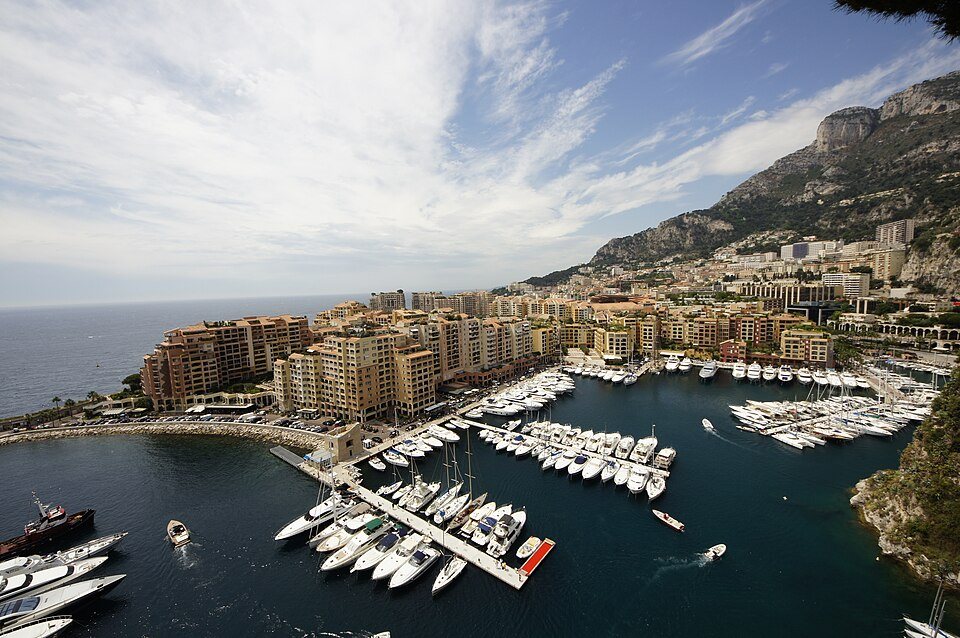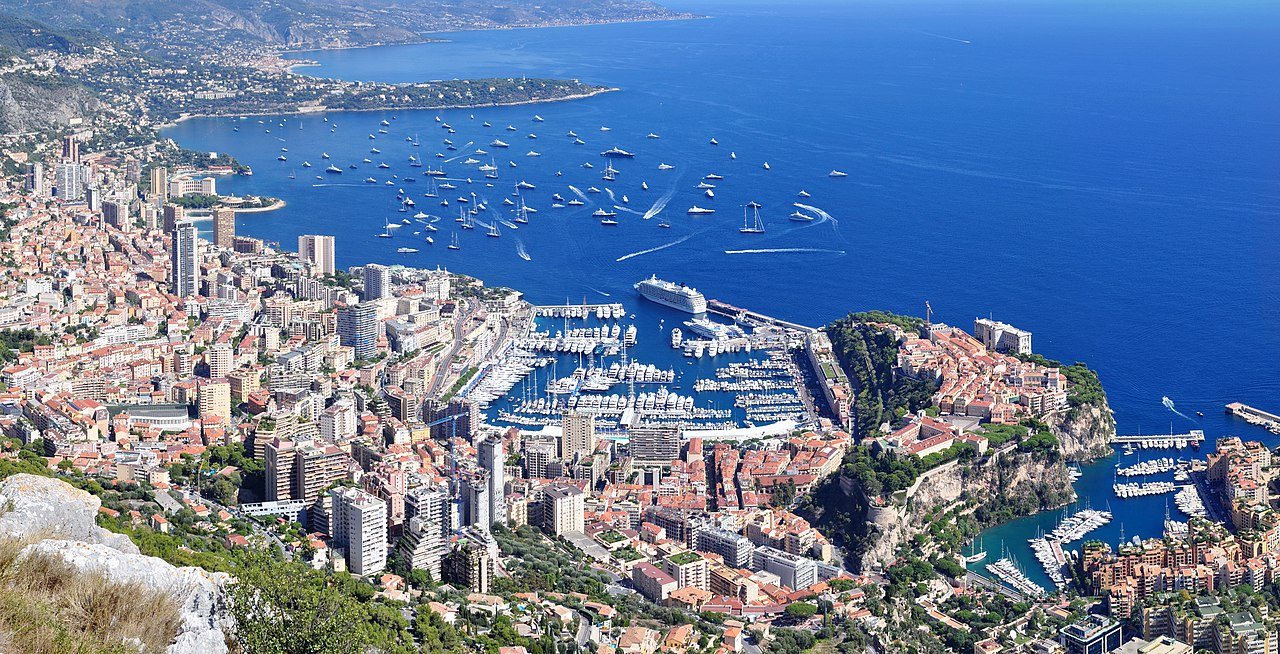
Monaco ran out of Monaco a long time ago. The country is smaller than New York's Central Park, and most of what little land it had was already covered in palace, cathedral, and the tight stack of streets on Le Rocher. So when the principality needed a national stadium, a marina, a business district, and more housing than its borders could hold, it did the only thing left: it made new ground. Fontvieille, the flat district west of the harbor, is built almost entirely on land that did not exist fifty years ago, and its stadium sits on top of a car park that sits on top of the seabed.
Why Monaco had to build its own ground
Land reclamation in Monaco isn't a curiosity, it's policy. Roughly a fifth of the country's surface area has been created by pushing the coastline outward, filling bays with rock and fill, and building straight up from there. Fontvieille is the largest single piece of this work: a district carved out of what used to be open water below the Rock, filled in stages from the 1970s onward until it had enough solid ground for apartment blocks, a heliport, light industry, and a marina of its own.
The logic is blunt. Monaco cannot annex its neighbors and cannot easily go up everywhere — though it does, relentlessly — so the sea became the path of least political resistance. Every square meter reclaimed is a square meter that didn't require buying out a French commune or renegotiating a border. The result is a country that has, in living memory, measurably grown.
The stadium stacked on a car park
The Stade Louis II is the clearest illustration of how this made ground gets used. Rather than laying out a stadium at ground level the way most cities do, Monaco built it as the top layer of a vertical stack: several floors of parking and sports facilities below, the pitch and stands above, all resting on fill that itself rests on the sea floor. It's a car park with a stadium for a roof, in a district that is itself an artificial peninsula.
This isn't a gimmick, it's a necessity of arithmetic. A stadium needs a flat footprint roughly the size of several city blocks, and Monaco had no flat footprint of that size to spare. Stacking functions vertically — parking below, sport above, training facilities and other uses tucked into the structure — let the country get a stadium, a swimming facility, and parking capacity out of a single reclaimed plot instead of three separate ones it didn't have.
If you want to see the structure rather than just the turf, walk the perimeter at street level on the Fontvieille side. The scale of what's underneath the pitch becomes obvious once you notice how far below the stands the ground floor actually sits.
What's underneath, and what's next door
Fontvieille's reclaimed ground carries more than the stadium. The district holds Monaco's commercial port, a rose garden, a heliport, and the Prince's car collection, all built on the same filled land, all within a short walk of each other. It's worth knowing this before you arrive, because Fontvieille doesn't read as "reclaimed land" the way a landfill might — it reads as an ordinary, slightly windswept district of midrise apartment blocks and marina moorings. The seam between old rock and new fill is invisible unless you already know to look for it, which is part of the point: Monaco wanted usable land, not a monument to engineering.
Don't confuse this stadium with the Circuit de Monaco. The Grand Prix circuit runs through the streets of the harbor and Monte Carlo, using public roads rather than a purpose-built track, and it has nothing structurally to do with Fontvieille's made ground. The two are easy to mix up in conversation because both involve Monaco building something improbable in a space too small for it, but the stadium is a stacked building, not a closed road circuit.
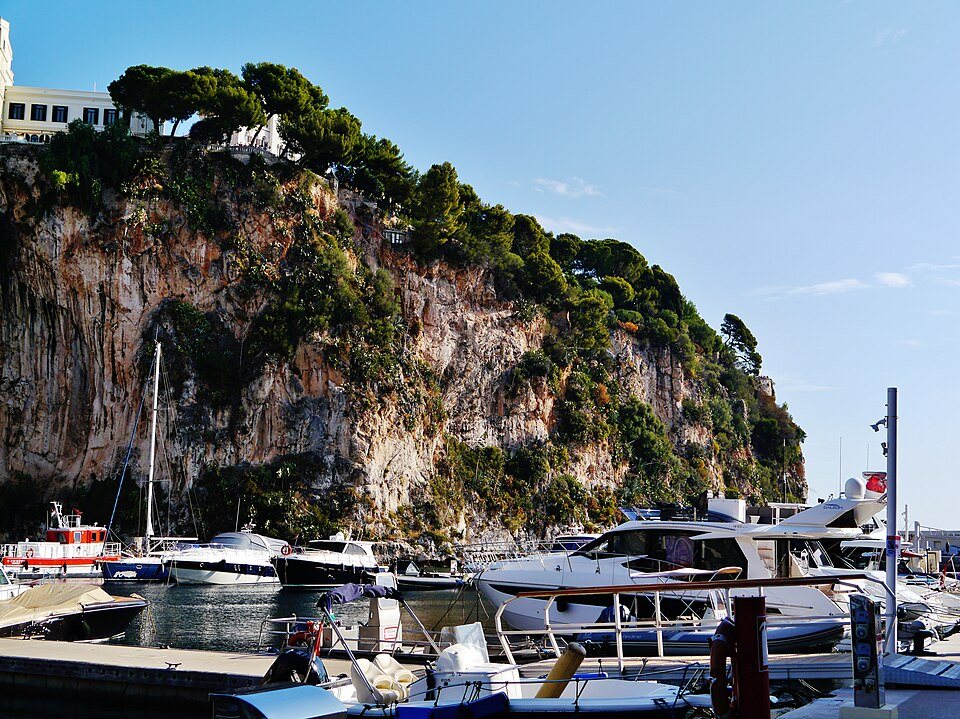
Fontvieille's marina, directly below the stadium's seaward flank, is smaller and quieter than Port Hercule on the other side of the Rock, and it's a useful place to understand how reclaimed coastline actually behaves over time: the seawall here was engineered as hard infrastructure from day one, not inherited from a natural harbor the way Port Hercule's older moorings were.
Reading the made ground as you walk it
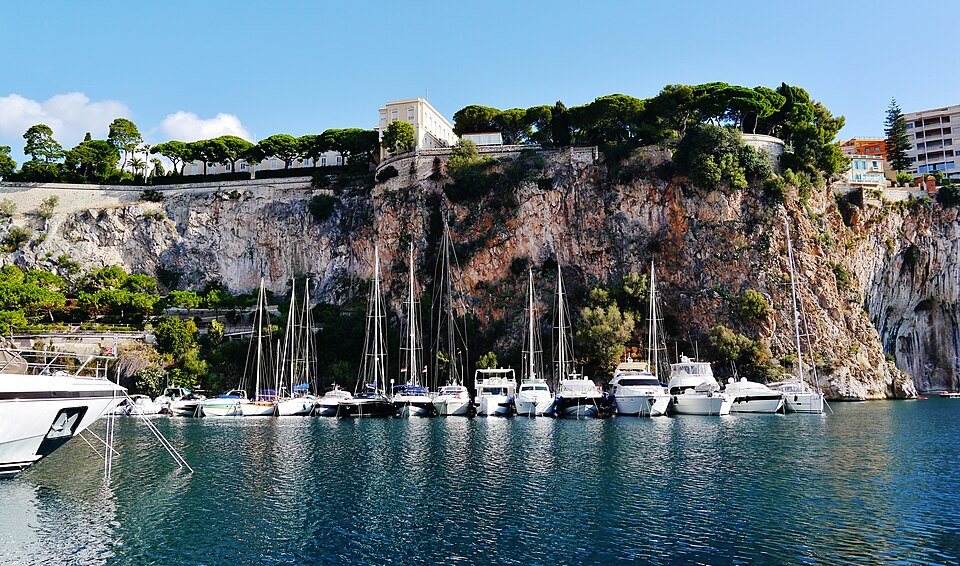
The most useful habit for a visitor is to keep asking, as you move around the district, whether the ground under your feet is old rock or new fill. Le Rocher and the cliffs above the harbor are the genuine article, carved by the sea over geological time. Fontvieille, the flat apron around the stadium, and a fair amount of the harbor frontage are comparatively young, built within a human lifetime and still being added to. Monaco has ongoing reclamation projects further along the coast, extending the same logic that produced Fontvieille into new offshore platforms — the country treats land reclamation less as a one-off project and more as a standing tool of national planning.
None of this requires special access to notice. Fontvieille is a normal place to walk through, not a construction site, and the stadium itself functions as an ordinary piece of civic infrastructure — training ground, event space, swimming pool, and parking garage bundled into one building. What makes it worth a paragraph in any practical guide is simply the arithmetic behind it: a government that needed a stadium, didn't have the land, and built the land first.
Getting there
Fontvieille sits at the opposite end of the principality from Monaco-Ville and the palace, which makes it a natural second stop after a morning on the Rock. See Getting Around for the practicalities of covering that distance — the district connects to the rest of Monaco by road and on foot along the harbor front, and the walk itself, skirting the marina and passing beneath the stadium's lower levels, is the easiest way to feel the join between old Monaco and the new ground beside it.
In pictures