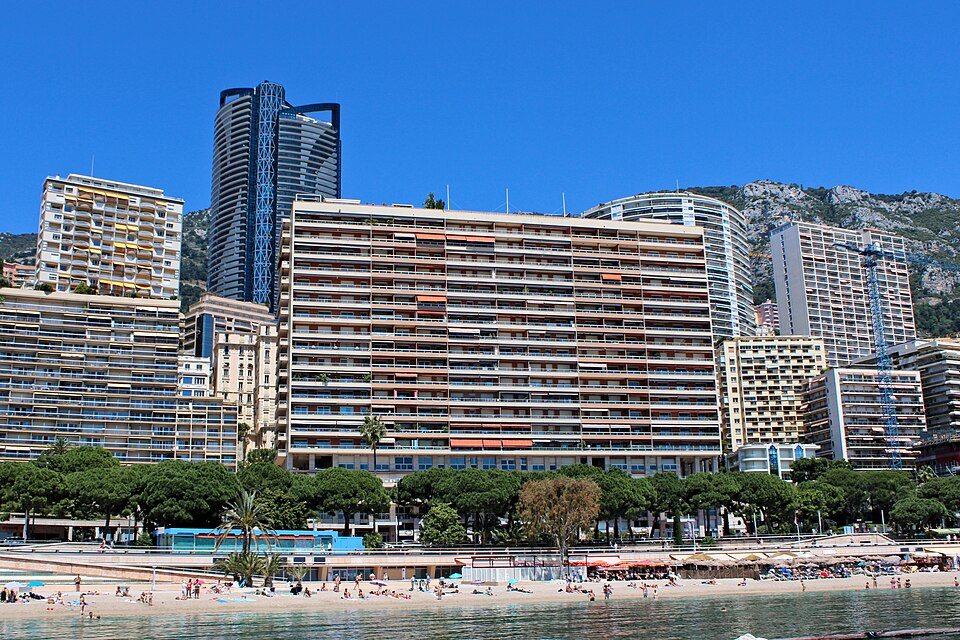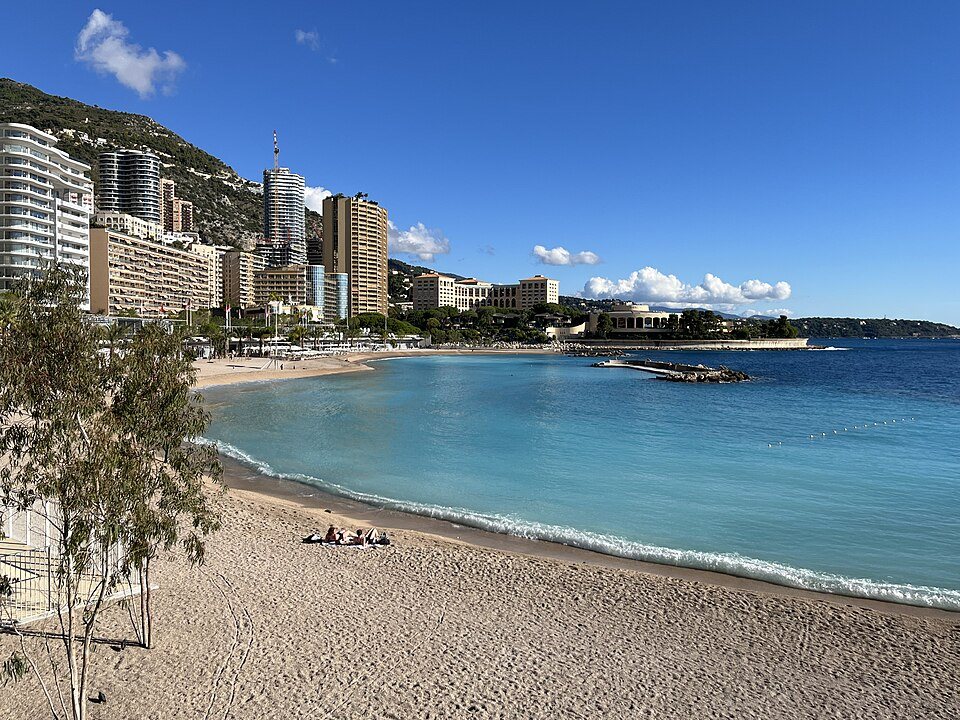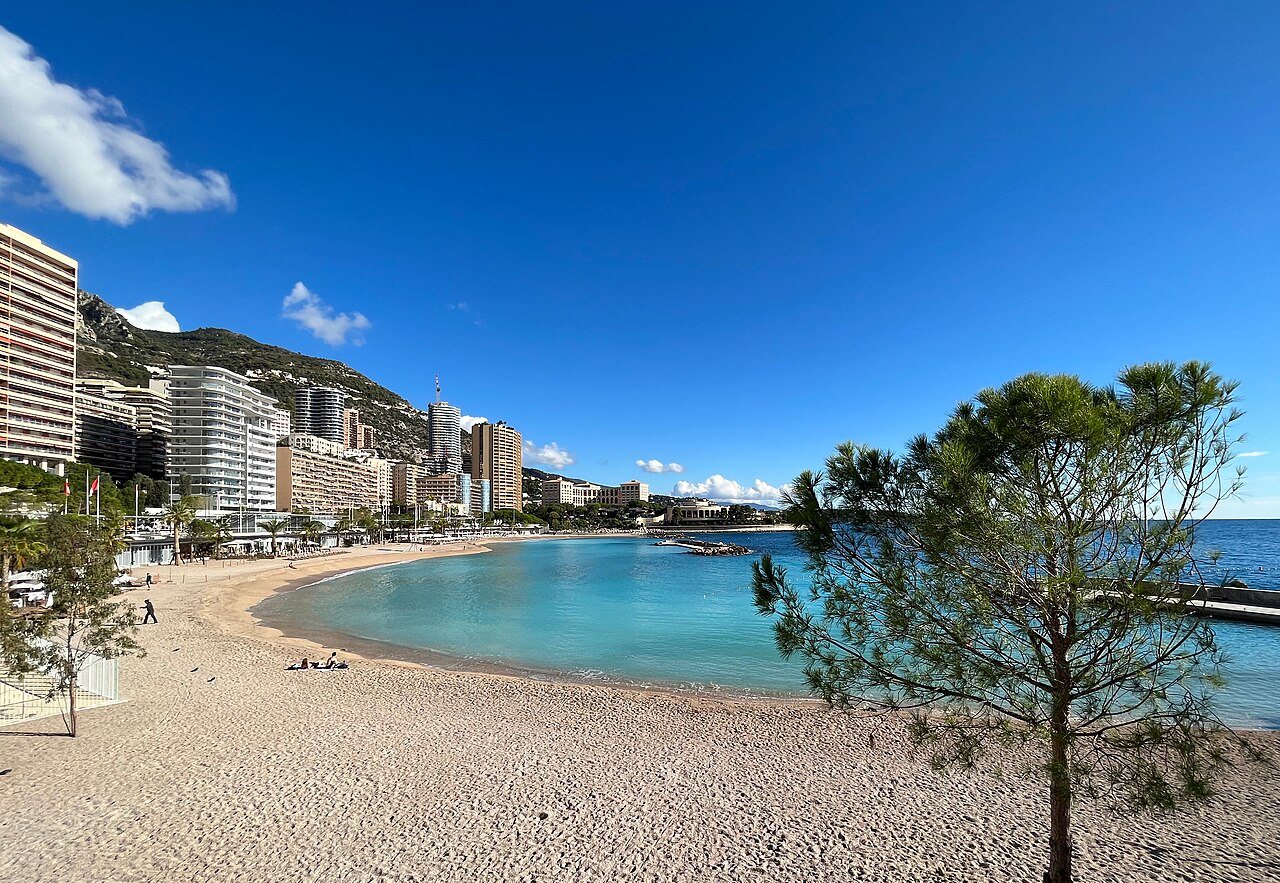
Monaco is built on a wedge of rock that drops almost straight into the Mediterranean, which is a problem if what you actually want is a beach. Larvotto is the answer the principality came up with: a short run of coves at the eastern edge of Monte-Carlo, sheltered by breakwaters, kept supplied with sand that does not occur naturally anywhere nearby. It is the only sand beach in the country, and almost everything about it — the shape of the coves, the color of the water, the fact that it is there at all — comes from decisions someone made rather than from geography.
Why the sand had to come from somewhere else
The coastline here was originally rock and shingle, the same as the rest of Monaco's shore. What you walk on at Larvotto today is sand that has been trucked or shipped in and periodically topped up, because the sea along this stretch does not deposit sand on its own — there's no river mouth, no natural sediment drift, nothing feeding the shore the way beaches further along the French coast are fed. Left alone, the current and winter storms simply carry sand away faster than nature replaces it, so the beach needs maintenance the way a swimming pool needs maintenance, not the way a natural beach manages itself.
This is really an extension of a pattern you can see all over the principality: Monaco has very little flat, usable land and has spent more than a century manufacturing more of it. Fontvieille is the best-known example of land reclaimed from the sea outright — see Made Ground for that story — and Larvotto is the beach version of the same instinct. If the coastline won't give you what you need, you build it.
If the sand looks unusually fresh or the color seems a shade different from one visit to the next, that's not your imagination — replenishment happens on a cycle, and the beach looks slightly different depending on how recently it was topped up.
Reading the coves
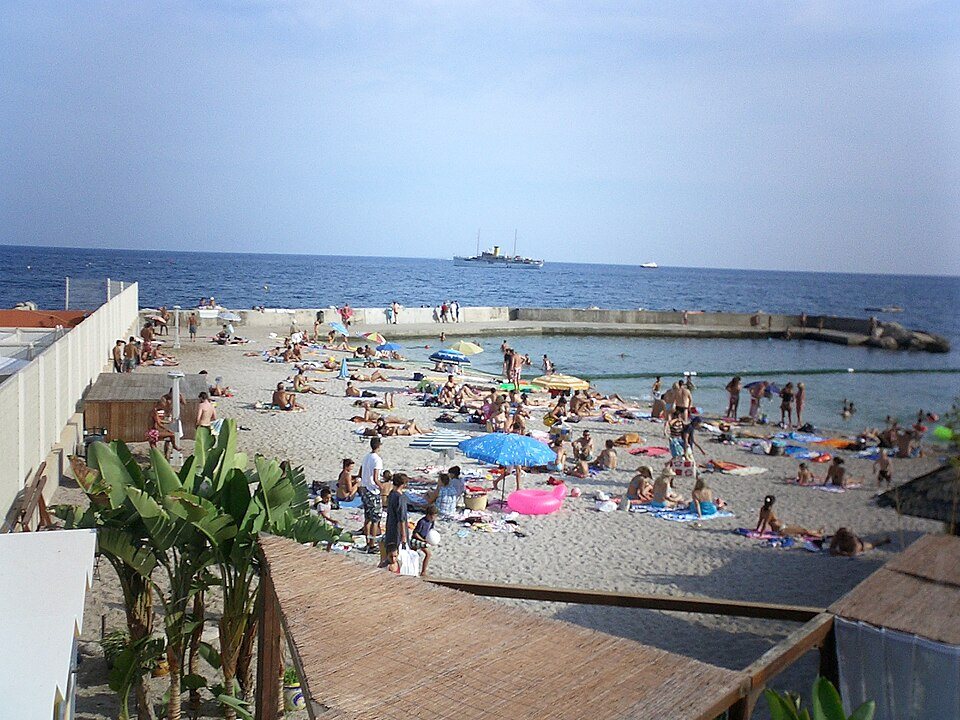
Larvotto isn't one continuous beach; it's a series of coves separated by low rock breakwaters that run out into the water like fingers. These groins do two jobs: they slow the sand loss mentioned above, and they break up the swell so the water inside each cove stays calmer than the open sea just beyond. The result is a string of small, distinct bays rather than one long strand, which matters practically — pick a cove based on how sheltered you want to be, not just on which looks least crowded from the promenade.
Some sections of the beach are open and free to the public; others are run as managed concessions with their own loungers, umbrellas, and service, operated by private beach clubs under agreement with the commune. The split isn't always obvious at a glance, so if you're planning to just spread a towel and swim, it's worth walking the length of the beach once before settling, since the free public stretches and the paid concessions sit right next to each other with no real separation beyond signage.
Don't assume the whole beach is open-access just because the first cove you reach is. Check the signage or the relevant beach club's own information before setting up, rather than discovering the difference when someone comes to collect for the lounger you didn't know you were sitting on.
Swimming conditions and the rest of the facilities
The breakwaters that create the coves also mean the water at Larvotto is noticeably calmer than you'd expect from an open Mediterranean shore — this is a beach built for swimming laps and floating, not for waves. Lifeguard cover operates during the main season; check current coverage with the local authority or posted signage rather than assuming it year-round, since staffing follows the season rather than the calendar date.
Showers, changing areas, and basic facilities are available along the promenade, and the paid beach clubs generally include sunbeds, food, and drink service as part of what you're renting rather than the beach itself. For a wider sense of where to eat nearby once you're off the sand, see Food & Drink.
The water quality here is monitored like any public bathing area in Europe, and conditions are generally good, but swimming right next to Port Hercule's shipping lane this is not — Larvotto sits well clear of the working harbor, which is one more reason it was chosen for this role in the first place. For the working side of Monaco's waterfront, that's a separate story told at The Harbour.
Getting there and what's around it
Larvotto sits at the Monte-Carlo end of the principality, an easy walk from the Jardin Japonais, which makes for a natural pairing if you want shade and calm water in the same afternoon — the garden's pond and the beach's sheltered coves are both, in their own ways, engineered calm. The Grimaldi Forum convention center backs onto the same stretch of coast, so the area doubles as an events district outside of beach season.
Public buses and the principality's compact scale mean you don't need a car to reach Larvotto from almost anywhere else in Monaco; see Getting Around for the practical options. If you're coming from the old town on the Rock, it's a longer walk than it looks on a map because of the terrain in between — budget more time than the straight-line distance suggests, or take the bus for that leg and save your legs for Le Rocher itself, which rewards walking far more than the flat road along the coast does.
For a sense of how Larvotto fits into a day that also covers the Rock, the gardens, and the harbor, the Itineraries section lays out a few ways to sequence it so you're not backtracking across the principality more than necessary.
What Larvotto ultimately proves is that in Monaco, even the beach is infrastructure — maintained, managed, and placed exactly where it is because nothing about this coastline arrived that way on its own. Knowing that doesn't make the swim any less pleasant; it just means you're in on the joke when you feel the sand.
In pictures