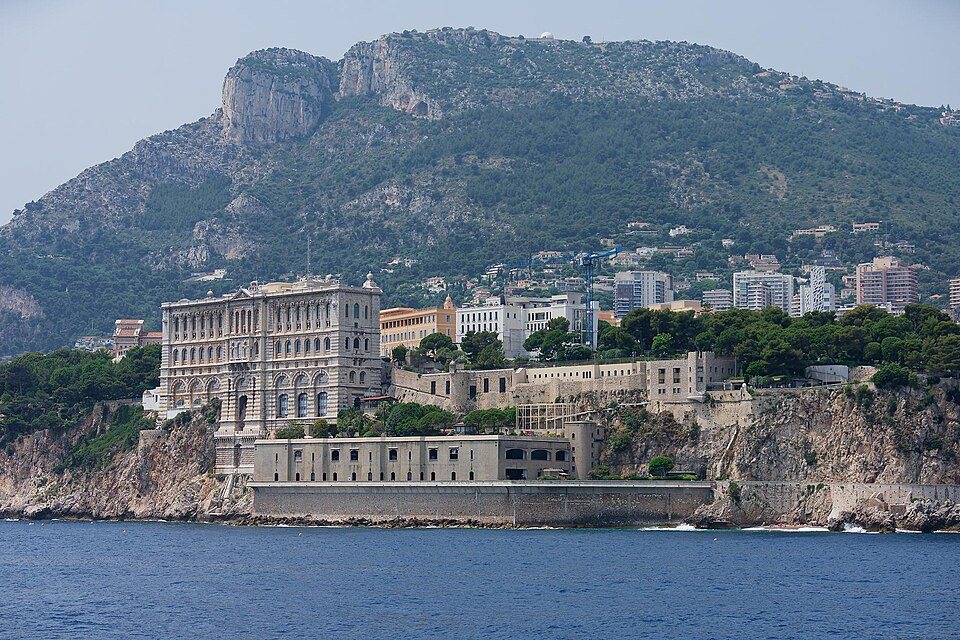
Most people who climb the steps to the Musée Océanographique assume it is named after a prince the way a stadium is named after a sponsor — a title lent to a building he never much thought about. That is backward. Prince Albert I spent much of his adult life at sea, in a small fleet of research yachts he fitted out himself, dragging nets through water two miles deep and arguing with the scientists he employed about where to drop them next. The museum on le Rocher is not a monument to him. It is his laboratory, left standing.
A prince who would rather be below deck
Albert was born in 1848 and inherited a title he did not treat as a full-time occupation. From the 1880s onward he spent long stretches of each year aboard a succession of vessels — the Hirondelle, then three ships all named Princesse Alice — running what amounted to a private, seaborne research institute. He commissioned custom winches capable of lowering sounding lines and trawls to depths no one had reliably measured before, and he personally logged specimens as they came up in the nets. Crews who worked under him later described a man who wanted to be told the truth about a sample, not a flattering guess.
He was not a dabbler funding other people's science from a distance. He designed equipment — a device for capturing deep-sea organisms without crushing them on the way up, improved drift bottles for tracking ocean currents — and he published the results under his own name alongside professional naturalists. His expeditions mapped parts of the Mediterranean and North Atlantic seafloor, studied the Gulf Stream, and brought back specimens of species that had never been formally described. Albert Einstein's physicist contemporaries get the "amateur scientist who turned out to be right" story; Monaco's version is a reigning head of state who kept a whale's stomach contents as data.
What the museum actually preserves
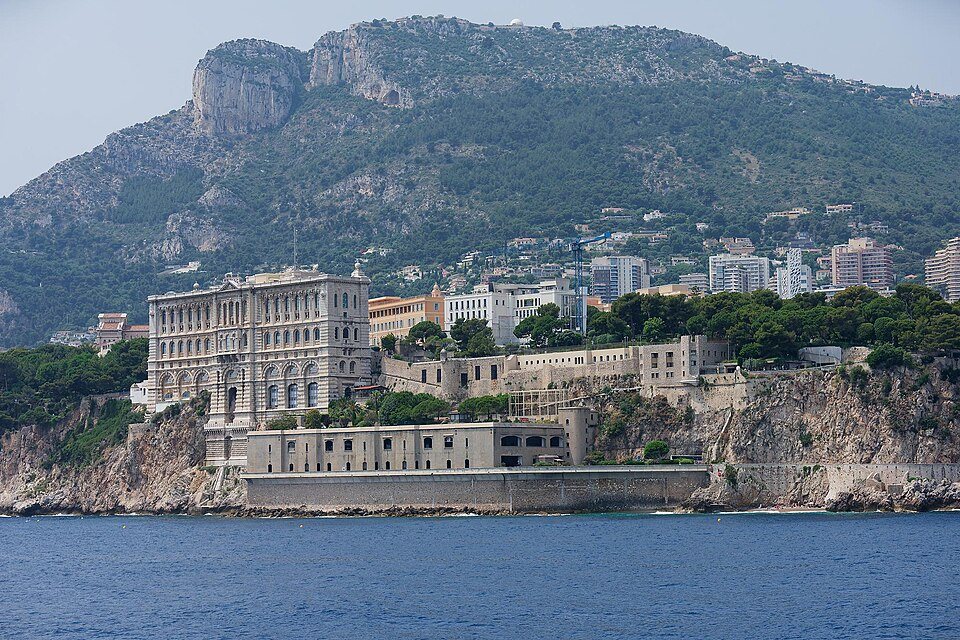
Albert opened the Musée Océanographique in 1910, and he built it on the edge of a cliff on purpose — the lower galleries sit at the base of a limestone drop that falls almost straight to the sea, which was itself a piece of engineering swagger as much as a research facility. He wanted a public-facing institution to sit alongside the private expeditions, somewhere ordinary visitors could see what the trawls had pulled up and somewhere scientists could keep working after he was gone.
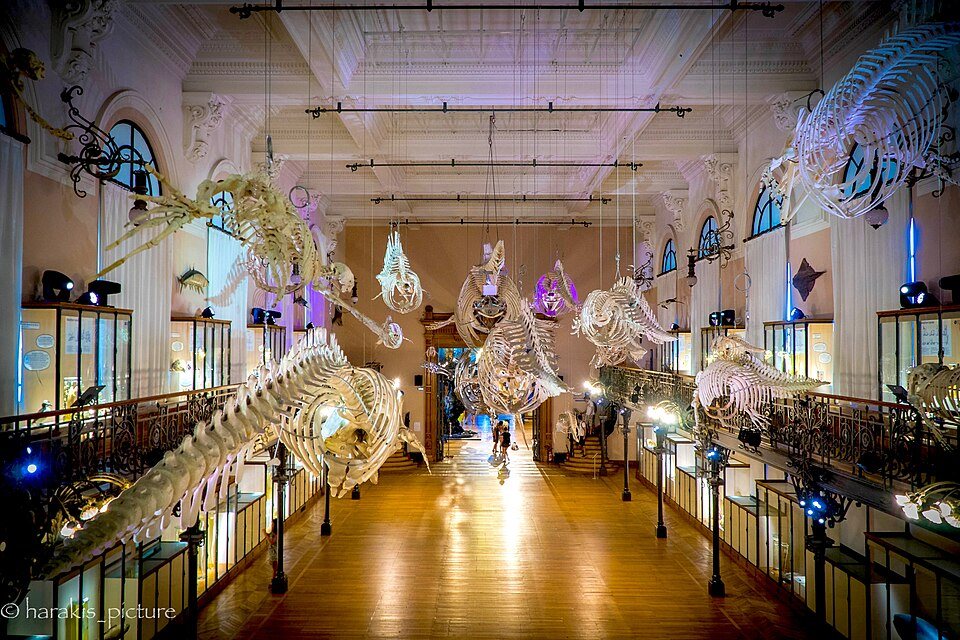
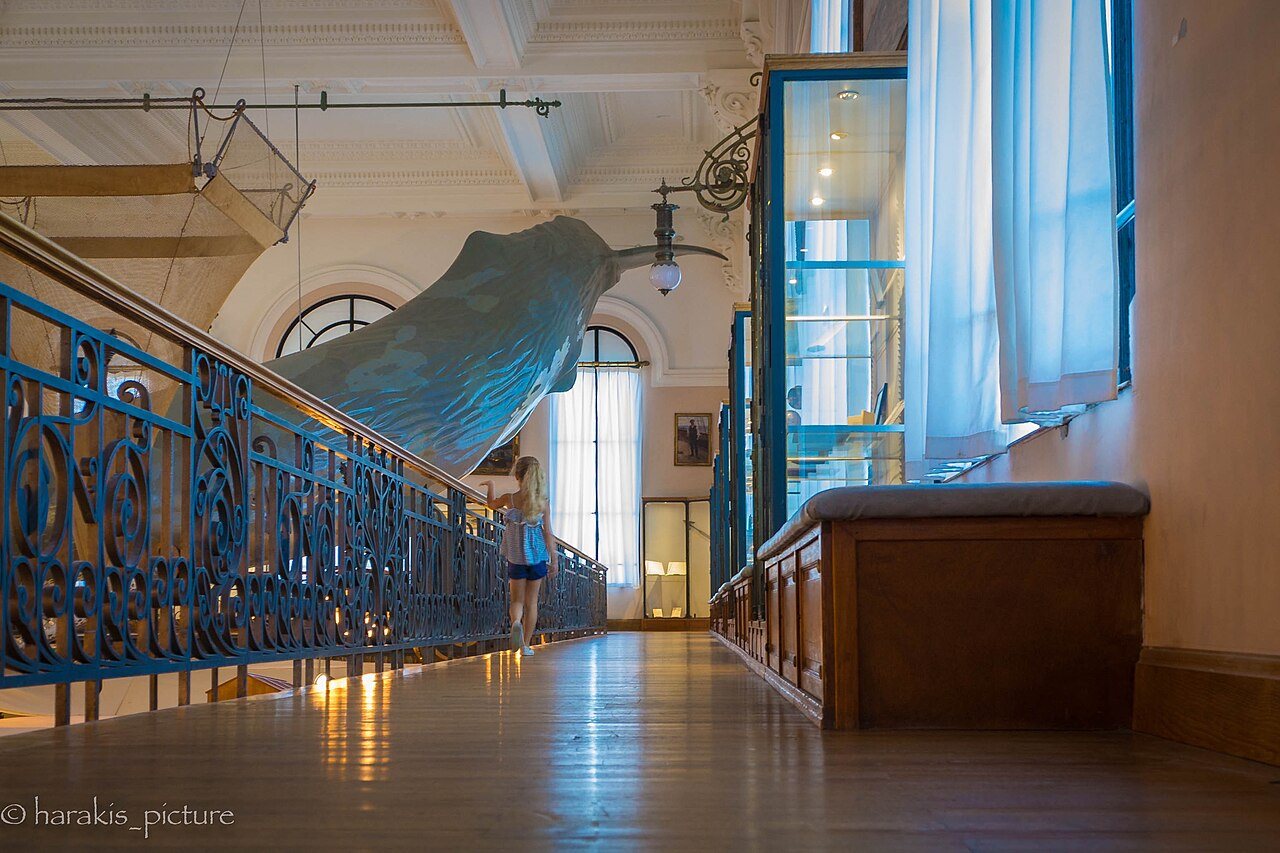
That second part matters: it did not become a dusty cabinet of curiosities. Jacques Cousteau directed the museum for three decades starting in the 1950s, and the building still functions as a research and aquarium institution rather than a static exhibit hall. The specimen collections assembled on Albert's own voyages — skeletal mounts, preserved deep-sea fish, instruments he designed himself — sit in the same building as a working aquarium and ongoing marine research. Ask at the information desk which galleries hold the original Albert I-era instruments and specimen cases; they are easy to walk past if you head straight for the tanks.
The museum is one of Monaco's most visited sites and the entrance hall can back up badly around midday. Going early in the day or checking the operator's site for current visiting arrangements before you set out will save you a wait on the steps.
Where else the prince-scientist shows up
Albert's instinct for documentation extended past the sea. The Jardin Exotique, developed under his reign, reflects the same pattern of a ruler treating Monaco's small footprint as a place to do serious natural-science work rather than just display wealth — in this case cataloguing succulents from arid climates on a cliffside garden that itself required real engineering to plant. If you are tracing Albert's scientific projects across the principality in a single visit, pairing the two makes sense geographically as well as thematically; both are perched on rock faces that Albert and his engineers treated as assets rather than obstacles.
The Palais Princier holds some material related to his voyages as well, folded into the broader run of state rooms and family history rather than isolated as a dedicated exhibit — worth asking about if a guided tour is running the day you visit, since the emphasis of palace tours shifts depending on which rooms are open to the public at a given time. Do not expect a standalone "Albert the oceanographer" wing there; the concentrated material is at the museum itself.
It is worth saying plainly, since the building sits a short walk from the museum and visitors sometimes conflate the two: the Belle Époque building most associated with Monaco's 19th-century wealth is the Monte Carlo casino, designed by Charles Garnier, who also built the Salle Garnier opera house inside it, home to the Opéra de Monte-Carlo. That building's fame rests on its architecture and its opera house, not on anything to do with Albert's research program — a separate story about a separate part of Monaco's history.
Seeing it as a working site, not a backdrop
The mistake visitors make with the Musée Océanographique is treating it as a photo stop on the way up to the palace — a quick look at the building's cliffside facade from outside, maybe a glance at the aquarium level, then on to the next stop in Monaco-Ville. That skips the part of the building that makes it unusual: this is still a functioning scientific institution, not a preserved historical set piece, and the specimen rooms upstairs are where Albert's actual working method is visible — his sketches, his instrument designs, the painstaking cataloguing that a reigning prince did not have to do himself but insisted on doing anyway.
If your visit to le Rocher is otherwise focused on the cathedral and the palace square, building in enough time at the museum to get past the entrance aquarium and into the upper galleries changes the visit considerably. It is also worth pairing with a walk along the sea side of the Rocher afterward — looking down at the water Albert spent his life measuring gives the collections upstairs a context that the display cases alone don't quite supply.
For planning logistics — how to get up to le Rocher, where the museum sits relative to other sights, and how to sequence a day that includes the palace, cathedral, and museum without doubling back on foot — the sights overview and getting around guides lay out the practical routes.
In pictures