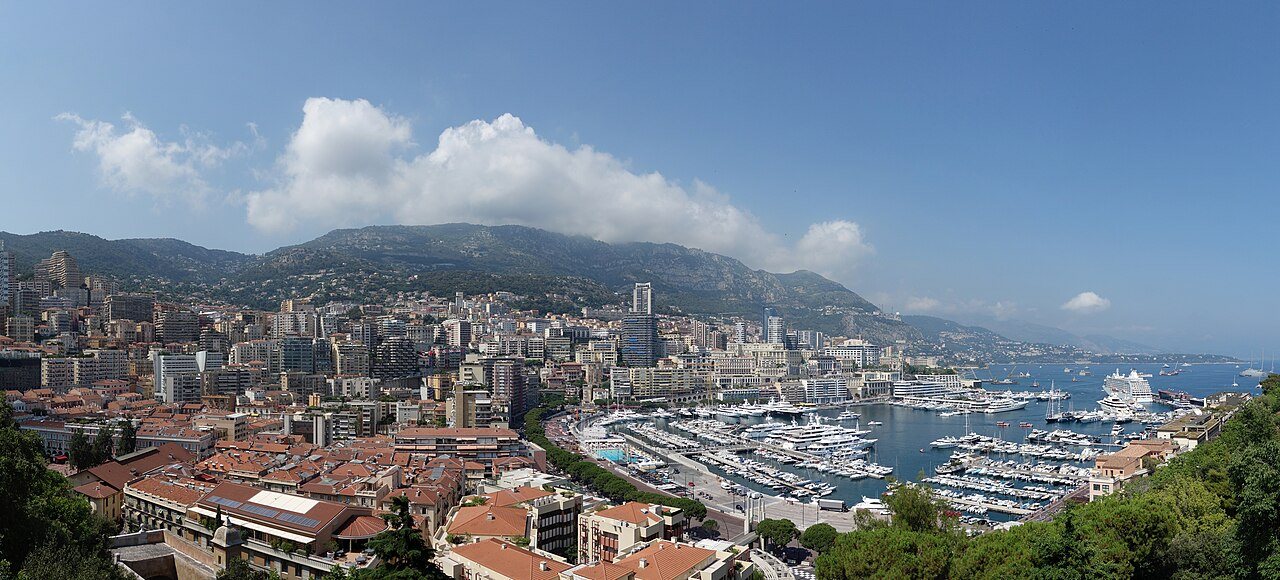
From the terraces of Le Rocher in Monaco, you can sometimes make out a pale smudge of stone on a headland to the west. That's Èze, a village built onto the top of a rock outcrop some 1,400 feet above the sea, and it's the single most popular half-day escape from Monaco for a reason: it looks like a film set, and most of it is still real.
Èze isn't a beach town and it isn't a resort. It's a medieval settlement, fortified against raids that stopped mattering centuries ago, that happens to have one of the best views on this entire stretch of coast. People go for an afternoon, not a vacation, and that's the right instinct.
Getting there from Monaco
Èze sits roughly between Monaco and Nice, and there are three ways to reach it, each with a catch.
- Bus. A regional bus line runs along the coast road and stops at Èze, making it the cheapest and simplest option if you don't mind a fixed schedule. Check current routes and timetables through the regional transit operator rather than guessing — service can be infrequent outside peak season.
- Taxi or private driver. Fastest and most flexible, especially if you're combining Èze with another stop. Ask your hotel concierge in Monaco to book one; see Getting Around for the general logic of taxis here.
- Drive yourself. The Moyenne Corniche, the middle of the three coast roads linking Monaco and Nice, runs almost directly past the village and has roadside parking below it. Parking fills up fast in the middle of the day in summer — arrive early or be prepared to circle.
There is no train station in the hilltop village itself. Èze-sur-Mer, the little station by the water, is a different place entirely and a steep uphill walk from the one on the rock — don't book a rail ticket assuming it drops you at the medieval core.
The village on the rock
Once you're through the old gate, Èze is essentially one long, narrow, stepped street network that loops around and up the hill, lined with stone houses that lean into each other overhead. Cars can't get in, which is most of why it still feels intact. The streets are cobbled, uneven, and often sloped at odd angles — flat shoes matter more here than almost anywhere else on this coast.
There's no single building you're obligated to see. The village itself is the attraction: low stone archways, small chapels, doorways that open straight onto the lane, and the occasional gap between houses that frames the sea far below. Much of the ground floor space along the main routes is given over to galleries, jewelers, and perfume houses — Èze has a long association with perfume-making, and a couple of the historic houses here still run it as their main trade. Window-shopping is part of the walk; you don't need to buy anything to enjoy the smell of the place.
The crowds thin out noticeably if you walk the upper lanes rather than sticking to the main through-route — the village is small enough that a five-minute detour gets you a quiet stretch of stone wall and a view with nobody else in it.
The exotic garden at the summit
At the very top of the rock, where a fortress once stood, there's now a garden of cactus and succulent plantings arranged along the ruined outline of the old castle walls. It's a separate, ticketed site from the village itself, with its own mechanism for entry that you'll find posted at the gate — check current terms there rather than assuming.
The reason to go up is the view, not the botany. From the top, the coastline opens out in both directions — on a clear day you can trace the curve of the Mediterranean toward Cap Ferrat one way and toward the Italian border the other. It's a genuinely different vantage point from anything available in Monaco itself, precisely because Monaco doesn't have a rock this tall sitting right on the water. If you've already walked the Jardin Exotique in Monaco, this is a cousin of that idea — succulents against a sea view — but higher up and with a ruin built into the layout.
Food and a sense of scale
Èze has restaurants, cafés, and at least one well-known hotel terrace with sweeping views, but it's worth saying plainly: this is a small village built for a few thousand day visitors at a time, not a city with full-scale dining infrastructure. Options are limited, kitchens can be slow when a tour bus arrives all at once, and prices reflect a captive, scenic location. If you're hungry and not fussy about where, eating before or after your visit — in Nice, in Monaco, or in one of the smaller towns along the Corniche — is often the easier plan. If you do want to eat in the village, a terrace table with a view is the thing people remember; ask for one when you arrive rather than after you're seated.
Èze gets genuinely crowded in the middle of the day during the warmer months, with tour groups arriving by the coachload. If you want the quiet version of the village — the one where you can actually hear your own footsteps on the stone — go either early in the day or toward the end of it.
Making it part of a bigger day
Because Èze sits directly on the Moyenne Corniche between Monaco and Nice, it pairs naturally with other stops along that road rather than standing alone. Some visitors combine it with a wander through Nice's old town, or with a stop at Èze-sur-Mer down by the water for a swim, treating the hilltop village as the midday anchor of a longer coastal loop. For more structured ways to combine it with other sights, see our broader Itineraries and Day Trips guides.
What you shouldn't do is treat Èze as a quick drive-by. The whole point of the place is slowing down enough to notice the stonework, get a little lost in the lanes, and stand still at the top for longer than feels necessary. It rewards an unhurried afternoon far more than a rushed hour between other plans.
In pictures