The Prince's Palace sits on top of a limestone spur because that spur was, for most of its history, the only sensible place to put a fortress. Cliffs on three sides, a single approach on the fourth, and a harbor below for supply and escape. It changed hands the way strongholds on the Ligurian coast usually did — by siege, by bribery, and once, memorably, by a man in a monk's habit.
A Disguise That Changed Monaco's History
In January 1297, François Grimaldi — remembered by the nickname Malizia, "the Cunning" — is said to have talked his way through the fortress gate dressed as a Franciscan friar, asking for shelter for the night. Once inside, he let in soldiers who had been waiting nearby, and the Genoese garrison holding the rock for the Ghibelline faction was overrun. It is the founding story of Grimaldi rule in Monaco, told and retold with enough consistency across centuries that it has become the closest thing the principality has to a national myth. Whether every detail happened exactly that way is impossible to verify at this distance, but the outcome is not in doubt: from that point on, with interruptions, exiles, and one long stretch of French annexation, the Grimaldi family has held this rock.
The image stuck. A monk's robe over a soldier's intent is the kind of detail that explains, in one picture, how a family with no natural advantages — no army to speak of, no resources beyond the rock itself — managed to keep hold of a piece of coastline that far larger powers kept wanting to take from them.
The Rock Beneath the Palace
Understanding the palace means walking the promontory it sits on, known today as Le Rocher. The defensive logic is still legible even without any military background: the approach from the old town of Monaco-Ville is the only easy way in, and it would have been a killing ground for anyone attacking uphill. The seaward sides drop straight to the water. This is why the palace looks the way it does from below — less a decorative residence than a fortified block that later generations softened with windows, balustrades, and an interior courtyard.
Walk the perimeter path around the rock before or after visiting the palace itself. It's the only way to see the original defensive shape of the site rather than just its ceremonial front, and it costs nothing to do.
What the Palace Looks Like Today
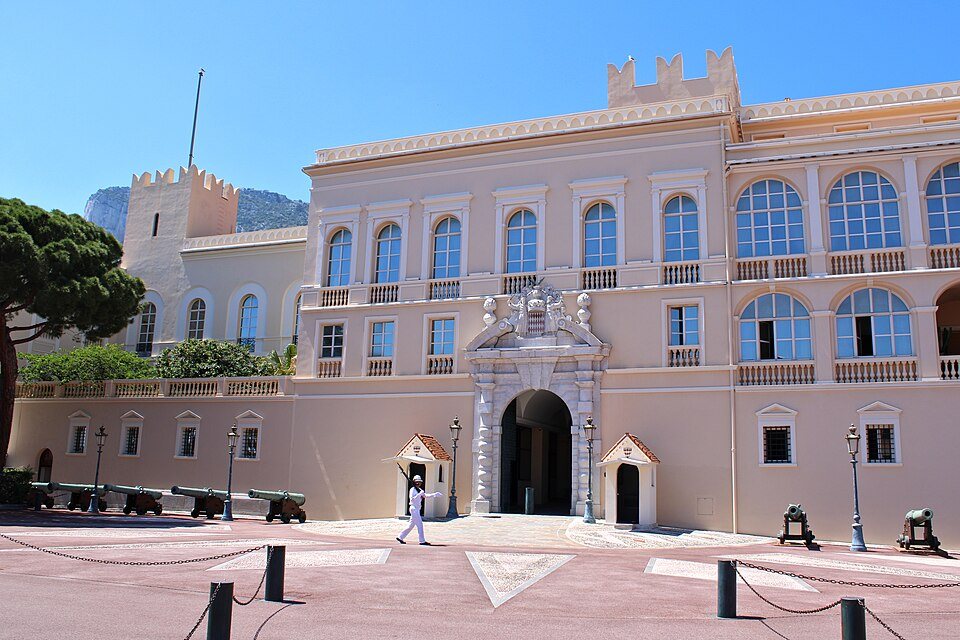
The building visitors see now is a patchwork of centuries — medieval bones under Renaissance and later additions, with a main courtyard that is genuinely the most photogenic part of the exterior. Uniformed guards from the Prince's Company of Carabiniers stand at the gate, and a changing of the guard takes place on a set routine each day; the operator's site lists the current schedule, and it's worth checking that before you plan a visit around it, since the routine has shifted over the years.
Inside, when the State Apartments are open to the public, the route runs through throne room, galleries, and reception rooms furnished with the kind of paintings and tapestries you'd expect from a ruling family with four hundred years to accumulate them. Entry is by ticket, usually with a single fixed route through the rooms and sometimes an audio guide included — the palace's own visitor information is the place to check current access, route, and any seasonal closures, since the apartments aren't open year-round. For the practical details of tickets and current opening arrangements, see the palace visitor page.
The State Apartments are not the same thing as the courtyard and guard-change, which are visible from outside without a ticket. A lot of visitors arrive expecting to walk in freely and only realize the interior requires a separate, timed entry once they're at the gate.
Making Sense of a Visit
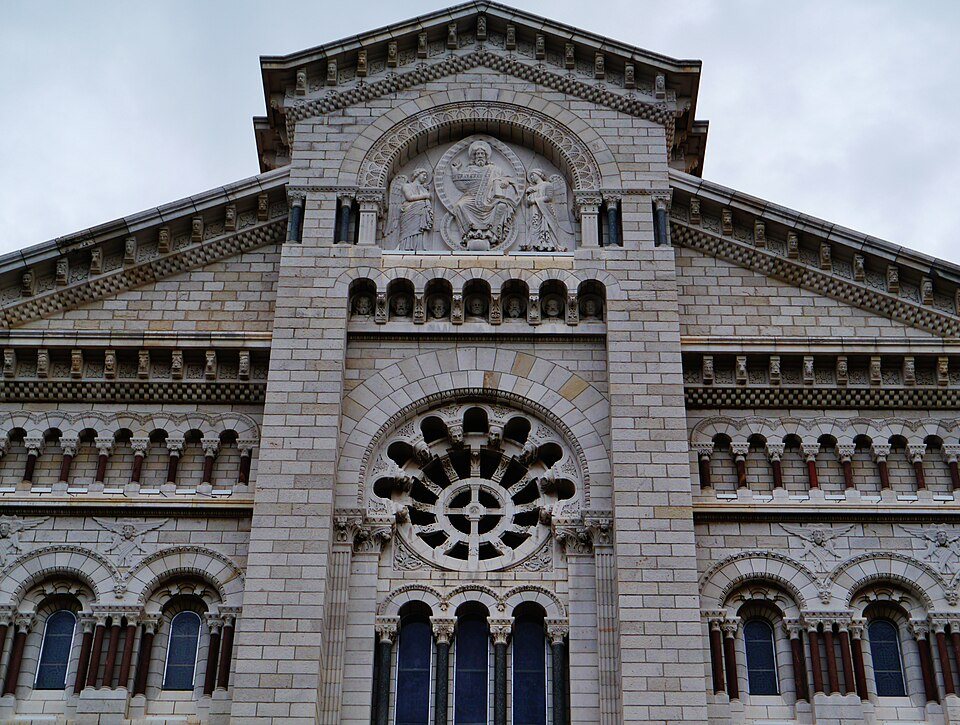
The palace works best as part of a loop through the old town rather than as an isolated stop. The Monaco Cathedral, where the Grimaldi family are buried, is a short walk away, and the narrow streets of Monaco-Ville around both buildings are worth wandering without a fixed plan. If you're coming up from the water, note that the climb from Port Hercule is genuinely steep in places — comfortable shoes matter more here than almost anywhere else in Monaco, since much of the old town is cobbled and slopes toward the sea on every side.
For a broader route that includes the palace alongside the rest of Le Rocher, the itineraries page has suggestions for pairing it with the cathedral and the oceanographic museum on the same morning without the day turning into a forced march. If you're short on time and have to choose, the courtyard and the guard-change cost nothing and take only a few minutes; the State Apartments are the deeper commitment, both in time and in the walking required once you're inside.
What's easy to miss is that the palace's real story isn't in its furniture but in the fact that it survived at all. Genoese, French, Spanish, and Savoyard forces all had reasons at various points to want this rock, and a family with none of their resources kept it anyway — starting, according to the story everyone in Monaco still tells, with a soldier who knew that a monk's habit opens doors an army cannot.
In pictures